....Colin wants to know what "excessive" means. He wants to know what "Contras" are. He's listening to the world around him. His parents are getting nervous. He wants to know what's the price of Heaven. He knows there is one because he was digging around for that baby bunny we buried last year and couldn't find it. We are glad he couldn't find it.He's singing songs but changing the words. The Roche Sisters tune "Older Girls" has become "Only Girls" to C. "Wheel me down to the willow ground" becomes "will me down to the wheel ground" when he sings it. He wants to know what the wheel ground is. "Bugs" in his strange lexicon are "bungs." He's listening and learning, storing things away for just the right moment to embarass his parents...C is also getting longer. It is getting harder to transfer him from the bed he falls asleep in to the bed he wakes up in. Although no Kareem, he is to his parents still growing like a weed. Ask Deb who tries to keep him in clothing.Clothing. The war cry from Deb these days is..."NO MORE! This is the last time I buy you clothes that you won't wear!" Colin has his own taste in dress. He has definitely started a new trend in fashion that has eclipsed anything anyone has heretofore conceived of. Some of our more interesting friends have taken to observing C and trying to imitate his sense of style and color. It is hard to imitate genius, however. Clashing blues is his specialty, especially when he has an unusually early morning. When given a chance to wake up normally--say, ten o'clock--he is often found sporting three or four long-sleeve T-shirts. Hey! You never know what the weather is like out there! Lord knows you can't trust what your parents tell you.I took C to one of my Dad's Chanters concerts. This is a group of rather elderly gentlemen, slightly out of tune but singing their hearts out. Not a five year old's ultimate dream. There were a lot of elderly people in the audience of seventeen hundred at this concert. I felt underaged. It was ninety degrees in the concert hall. Colin was wearing, at least to my knowledge, his Karate Kid pajamas (he refuses to acknowledge this) and some corduroys. Ten minutes pass. There is some singing. To my left is my mother. To my right is some serious squirming. C tries to sing along. He says he's hot. Off come the Karate Kids. Under it is a long sleeve shirt. He stage whispers to my Mom that he can take off three shirts and "still not be naked." There are snickers, now, among the elderly. Another two shirts come off. There is a pile in the aisle. He's now down to a short sleeve T-shirt and still roasting. By now the focus of attention around us is, shall we say, no longer on center stage. Intermission is hours away. Any minute a spotlight will be redirected onto my son. During the next song Mom, me, and the Kid bundle out of there with C's wardrobe in my arms......The fact is, ole dance-in-the-nude Colin is The Man around here...He has gone beyond accepted methods of doing business. He's developed a look. He has this dark sideways grump put on when things aren't going so great. The look says it all. It says that my opinion polls are way down. It says that one more morning of being awakened and dumped at the breakfast table without a blanket may be his last. It says that he and the dogs are considering a recall.Of course he has his better days. Yesterday I picked him up early from school and we hopped on our bikes and did a few miles. It is a trick riding behind Colin. You have to have your wits about you, no doubt! Colin has to talk and ride and jump around and sing about Jesus (he doesn't really know the words) and dodge in and out like the guy in the RAD movie (He's seen it a thousand times). His is a little two-wheel bike that just fits his little shrimp legs perfectly. He is excited! He learned to ride one day about two months ago in the Stoughton High School parking lot, chosen because it was big and at the time, empty. It took two minutes for him to "learn" to ride his bike, and several more days to learn. He still doesn't get on his bike without the help of Dad, or a curb. But once mounted...!A month after learning we did a 28 mile excursion along an abandoned railroad bed bike trail. Can you imagine riding 28 miles in first gear? That is about what Colin did on his little bike. Those legs just pumped all day! He didn't do badly on the falls, either. Every so often--and very often toward the end of the trip--he would suddenly veer off the path in the underbrush, completely disappeared but for a plaintive cry for help...
Tuesday, May 24, 2011
PAEAN FOR AN ELDEST SON
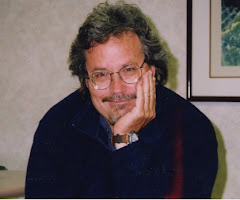
Digging through some old papers yesterday, I came across a form letter I'd sent out to friends about five and a half years after my oldest son was born, which would have been 23 and a half years ago. Strange tune, it. However, it does its fair share of describing young fatherhood and also describes reasonably well my oldest son, at age almost six. Here is some part of the tune:


Monday, May 9, 2011
The Perils of Prayer
I admire those eighteenth-century Hasids who understood the risk of prayer. Rabbi Uri of Strelisk took sorrowful leave of his household every morning because he was setting off to his prayers. He told his family how to dispose of his manuscripts if praying should kill him. A ritual slaughterer, similarly, every morning bade goodbye to wife and children and wept as if he would never see them again. His friend asked him why. Because, he answered, when I begin I call out to the Lord. Then I pray, "Have mercy on us." Who knows what the Lord's power will do to me in that moment after I have invoked it and before I beg for mercy?Annie Dillard, The Writing Life
The Perils of Work
The youth gets together his materials to build a bridge to the moon, or perchance a palace or temple on the earth, and at length the middle-aged man concludes to build a wood-shed with them.
ThoreauAlas, a good description of the vigor and at-large unrealism of my early days as a woodworker. There was nothing I could not eventually do, given time and the right materials. "Time and love have branded me with its claws," wrote Bob Dylan. Craftsmanship is like this, I think. If you don't start with passion and a vision completely out of sorts with what is possible, you don't end up accomplishing anything. Yet the irony is, what you accomplish is so out of sorts with that original vision, it is difficult to consider it anything but a woodshed. So it goes.
Wednesday, April 20, 2011
CHARACTER
Ashenden sighed, for the water was no longer quite so hot; he could not reach the tap with his hand nor could he turn it with his toes (as every properly regulated tap should turn) and if he got up enough to add more hot water he might just as well get out altogether. On the other hand he could not pull out the plug with his foot in order to empty the bath and so force himself to get out, nor could he find in himself the will-power to step out of it like a man. He had often heard people tell him that he possessed character and he reflected that people judge hastily in the affairs of life because they judge on insufficient evidence; they had never seen him in a hot, but diminishingly hot, bath...
W. Somerset Maugham, ASHENDEN
Tuesday, April 5, 2011
KLEINIG on SASSE
"...I still remember it graphically...it was such a significant point in my life. I still remember, Sasse was there, after a lecture, he had a big pile of books--he always carried a big pile of books into lectures, he never opened them, he knew it all by heart, he'd just have them along just in case...I said, 'Dr. Sasse, do you have a moment?'And he said [using a low gruff voice], "Yes?" Ah, ah, very abrupt.'Yes, what do you want Kleinig?'And I said, 'Ah, look, Dr. Sasse, I've got a spiritual problem."And Sasse stopped walking, and he faced me, and he lifted his finger and he said,'Good!'"
Monday, April 4, 2011
John Bunyan

I find to this day seven abominations in my heart:1) An inclination to unbelief.2) Suddenly forgetting the love and mercy that Christ shows us.3) A leaning to the works of the Law.4) Wanderings and coldness in prayer.5) Forgetting to watch for that which I have prayed for.6) A tendency to murmur because I have no more, and yet a willingness to abuse what I have.7) I can do none of those things which God commands me, but my corruptions will thrust themselves upon me so that "When I would do good, evil is present with me."These things I continually see and feel and am afflicted and oppressed with; yet the wisdom of God orders them for my good.1) They make me abhor myself.2) They keep me from trusting my heart.3) They convince me of the insufficiency of all inherent righteousness.4) They show me the necessity of flying to Jesus.5) They press me to pray to God.6) They show me the need I have to watch and be sober.7) And they provoke me to look to God, through Christ, to help me and carry me though this world.Amen.-John Bunyan
Such an old fashioned geezer, Bunyan. So obviously out of step with modern wisdom and psychology. The guy obviously needed therapy.
And golly, he was so much like me.
It is interesting to me that when we think of God's grace and the work of the Holy Spirit, we naturally think of God's Goodies: his peace, love, charity, salvation. We don't naturally associate the things Bunyan writes about: tentatio, a dying to ourselves, a profound awareness of our sinfulness; our shortcomings. Naturally we flee from these things, or else go into therapy (I've always flinched at the idea personally. I'd rather fix or outwait my own problems, or ignore them altogether). And honestly, this particular spiritual reality does not market well. It isn't on the outreach agenda. Unless you're reading John Kleinig or Senkbeil and their ilk, you have to go back to Bunyan to find it conveyed. And yet, it is a mark of sanctification, or being made holy. Who would have thought that Romans 7 was just about that very thing?
Saturday, March 26, 2011
Some Recent Work
About fifteen years ago, I built the library for the common room of Lutheran Church of the Living Christ. Here is half of it:


About five years after that, a member asked me to build a sort of library/entertainment center for his home, inspired by my work at the church. Here it is:

About four years after that, I was asked by another member of that church, who saw the library/entertainment center I built for the other member of the church, to build him an 8' x8' wall library for his home office. Here it is:

A year later, a co-worker of the wife of the guy who had me build his home office wall library called, asking for a wall library of their own. Here are pics of that:


So, here, to date, is my family tree of wall units, serial recommendations over a 15 year period. But wait. The granddaddy of them all was a suite of furniture I produced for an old friend, a NYC attorney who now resides in California. His was the most ambitious:

Finally, I also finished, a Prie Dieux I have been working at for about a year (mostly just staring at it and wondering when I'd get it done). I had a very patient client:


There. That brings us up to date. I feel a lot better now...
Subscribe to:
Posts (Atom)